Timeline

14 HOURS AND SEVERAL PROBLEMS

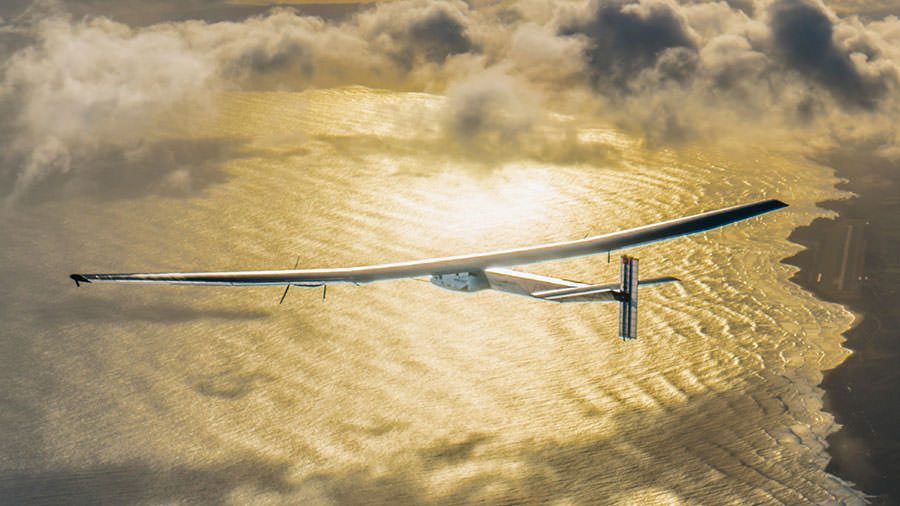
14 hours and 7 minutes – that was the duration of today's flight of Solar Impulse which ended just a short while ago.

In this flight number 9 test pilot Markus Scherdel reached a maximum altitude of 28'600 feet or 8717 meters above sea level. ...

Read more

In this flight number 9 test pilot Markus Scherdel reached a maximum altitude of 28'600 feet or 8717 meters above sea level. But we are totally open and honest with you this marathon flight didn't go through without problems. In fact we had to face several issues which need to be examined thoroughly in the next days. Right now our engineers are in the debriefing, starting to analyze the new problems with the HB-SIA. Already tomorrow I will be able to tell you more about the nature of these troubles and the solutions our specialists will find to fix them.

8:30, 8500

Its eight and a half hours now that the HB-SIA is airborne and Markus Scherdel has piloted the machine to 8500 meters above sea level.

This not only means that our solar airplane is flying longer and higher, but also, that all systems and components of the prototype ...

Read more

This not only means that our solar airplane is flying longer and higher, but also, that all systems and components of the prototype are working excellently.In fact they are working so good that our pilot for the first time has taken the opportunity to care about other things than the tasks of his test program. We were able to witness around lunch time a dialogue between Claude Nicollier and Markus about somehow understandable food. Claude was observing on the picture, coming from the on-board camera, Markus eating a banana.Claude: "How many bananas do you have with you?"
Markus: "This is the only one."
Claude: "And where do you end up putting the banana peel?"
Markus: "In a little plastic bag I have with me."
Claude: "Ok. By the way, we are having sandwiches here in the control room. With salami or ham."
Markus (somewhat enviously): "Wow."Don't worry Markus. Once you're back you certainly will be served an exquisite dinner.

TWO IN ONE

A new attempt for flight test number 9.

A new attempt for flight test number 9. After the delay of Solar Impulse's planned test yesterday due to strong winds yesterday, ...

Read more

A new attempt for flight test number 9. After the delay of Solar Impulse's planned test yesterday due to strong winds yesterday, the HB-SIA finally took off again this morning at 6.30. Unfavorable weather conditions have kept the plane grounded for 20 days, so you can well imagine the smile on the faces of the the Team when the plane lifted off.

The motto for today's mission issued by our head of flight test operations, Claude Nicollier, can be summarized as "two in one". After only one start and in one long operation, test pilot Markus Scherdel will try to meet the objectives of the postponed flight as well as those which were outlined for today's test mission. Once the changes done on the aircraft during the test intermission, the enlargement of the horizontal stabilizer, have proved their worth, Markus will climb to 27000 feet were key equipment such as the oxygen supply will have to pass an endurance test.And only in the evening will HB-SIA touch down. Let's cross fingers now for what could be the longest and highest flight of Solar Impulse so far.

9TH TEST FLIGHT POSTPONED

The whole team was fully ready to proceed with the 9th mission test flight today.

At 3:30 briefing we were all more than well prepared. With all these unfavorable weather conditions these last weeks, we have ...

Read more

At 3:30 briefing we were all more than well prepared. With all these unfavorable weather conditions these last weeks, we have not flown for 19 days and everybody was positively anxious.Sadly though at 04h24 the decision was taken to postpone today's flight as there was too much high altitude winds.

Taking the time to swallow our croissant and waiting for our morning tiredness and yawns too diminish a bit before we start another day and preparing for tomorrow's test.

A MURPHY’S NIGHT

Do you know Captain Edward A. Murphy Jr.? The US Air Force engineer is said to be the source of the famous phrase known as Murphy 's Law.

1949, after a failed test, he stated: If there's more than one possible outcome of a job or task, and one of those outcomes ...

Read more

1949, after a failed test, he stated: If there's more than one possible outcome of a job or task, and one of those outcomes will result in disaster or an undesirable consequence, then somebody will do it that way. Or, in short: "Whatever can go wrong, will go wrong."Why I'm telling you this? First because, typically Swiss, I am a grouch always expecting the worst. That shouldn't surprise you. After all Mr. Obama just finished our nice banking secrecy, Mr. Gadaffi proposed to the UN General Assembly to dissolve Switzerland and year after year we end up last in the European Song Contest. This leaves its marks.Secondly and now serious again the spirit of Mr. Murphy has not turned up at Solar Impulse yet. No technical or human error, no miscalculation nor accident has set back the development of our experimental solar airplane and it wouldn't be too arrogant to say: Solar Impulse is a success story. However, this has implications on the way this project is perceived. Success that's nothing new makes people forget all the work that was done and all the problems which had to be solved. Suddenly the extraordinary becomes normal and a day-night-flight with solar energy seems not to be a big deal anymore.Wrongly, because it still applies: The HB-SIA and its captain have to avoid many pitfalls before the first flight through the night will become a reality. There are, for instance, the four motors and the bearing structure of the aircraft that were not exposed to such a long-term test yet. Much has been calculated, simulated and tested but only the continuous use will show whether the prototype can meet all our expectations. Or the polymer lithium batteries which store the electricity produced by 12 000 photovoltaic cells. They are not heated but only protected by insulation against minus 40 degrees Celsius at 8500 meters above sea level. If the temperatures in the accumulators fall below 10 degrees they loose performance. Let's go to meteorological influences. Height is a major way for the HB-SIA to store energy. Each meter the plane climbs during the day can be retrieved at night unless the machine gets in a downwind zone as it can arise on the lee side of a mountain range and looses altitude and potential energy.Last but not least is the pilot who has to work like clockwork for over 24 hours. With each deviation from the ideal flight path he can waste valuable energy just as when he leaves the narrow bandwidth of only a few kilometres per hour in which the HB-SIA operates the most efficient. No auto pilot is supporting him in this complex task: as to program this device our engineers would need to know precisely the same flight data that is collected in the tests with the HB-SIA. Meanwhile no air conditioning but just an isolated suit is protecting the pilot against cockpit temperatures ranging from +35 to -20 degrees Celsius and the space inside is so limited that he has no way to stretch or to stand up. Packed with parachute, life jacket and oxygen supply he has to hold up in seat, which is deliberately unpadded designed to no make him overly comfortable so he can stay awake.As you see it's not all plain sailing until the first "Through the Night" flight of Solar Impulse and there is plenty of room for a Murphy's night.

Get more content